Belém’s fractured COP30 sees progress at the edges while core issues stall
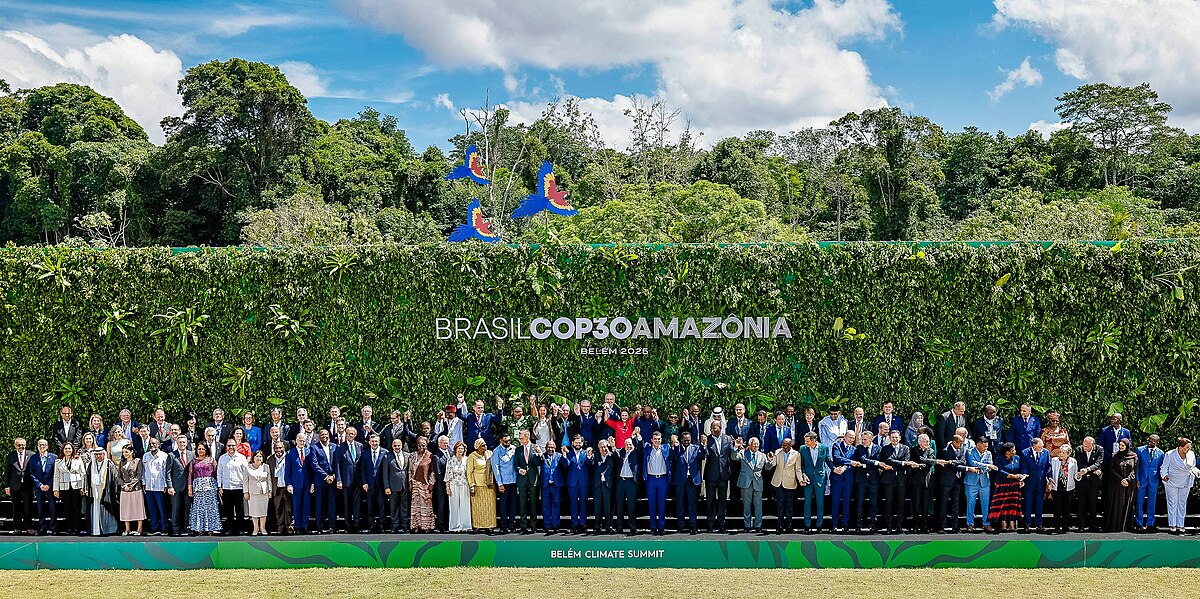
Official photo for COP30 Belém © Ricardo Stuckert / PR
26.11.2025
COP is the annual UN climate summit where nearly all nations negotiate and adopt the world’s climate response. This year’s COP30 climate summit in Belém, Brazil, will be remembered for its turbulence, literal and political. A torrential Amazonian rainstorm, a venue fire and forceful protests from Indigenous groups framed a conference already straining under geopolitical fractures. From the outset, negotiations were consumed by battles over fossil-fuel language, which absorbed political bandwidth and overshadowed other urgent issues, including finance. Despite new pledges, the Loss and Damage fund, created to support developing countries impacted by climate change, remained far below what vulnerable nations require. There were some hard-fought victories and promising new initiatives on the sidelines, yet the summit was defined as much by what was blocked as by what was achieved.
The United States, once central to climate diplomacy, did not participate. China, now the world’s largest emitter and a powerhouse of green manufacturing, declined to fill the vacuum. Though eager to help its BRICS partner Brazil deliver a smooth conference, Beijing made clear it would not substitute for Washington on climate finance, nor lead alone beyond the production and export of renewable-energy technologies. This absence of coordination between the two powers, once capable of unlocking breakthroughs, left space for Russia and the Gulf petrostates to play a more obstructive role. Saudi Arabia in particular felt emboldened to block any mention of fossil fuels, despite similar language having been agreed two years earlier in Dubai.
The result was a negotiated outcome many observers consider insufficient for keeping 1.5°C within reach. A roadmap for transitioning away from fossil fuels, championed by Colombia, the EU and more than 80 countries, was dropped entirely after Arab petrostates refused to engage. With talks nearing collapse, Brazil proposed relocating the fossil-fuel and deforestation roadmaps outside the COP process, rendering their legal force uncertain. Adaptation finance was pushed back from 2030 to 2035, and Amazon protection, (ironically at the first COP held in the Amazon), received only a vague passing mention.
Yet there was some progress. The final mutirão text included a voluntary, if diluted, plan to curb fossil fuels, and commitments to strengthen adaptation funding, just-transition mechanisms and improved tracking of resilience efforts.
Ocean ambition also surged: the One Ocean Partnership announced a global network of regenerative seascapes targeting $20 billion in finance and 20 million sq. km under regenerative management; The World Resources Institute’s (WRI) new tracker showed ocean actions rising sharply in Nationally Determined Contributions (NDCs), from 62% of coastal states in 2015 to 92% in 2025 submissions; and 17 countries joined the Blue NDC Challenge, which aims to address interconnected global challenges such as biodiversity loss and food and energy security. The five Ocean Breakthroughs launched coordinated plans across marine conservation, aquatic food, offshore energy, shipping and coastal tourism, while new “ecosystem breakthroughs” advanced investment in saltmarshes, mangroves and peatlands.
For all its flaws, COP30 expanded Indigenous and scientific participation, advanced ocean and nature-based solutions, and prised open wealthy nations’ wallets a little further. Whether Belém is judged a success or a failure, its outcomes must be understood within the geopolitical minefield in which it occurred. Attention now turns to COP31, set to be hosted by Turkey.